
Solitaire Tripeaks: Card Games
Card Games, IncCard
4.818.23K Reviews
- Version
- 3.2.6
- Installs
- 1.00M
- Age Rating
- Everyone
Screenshots
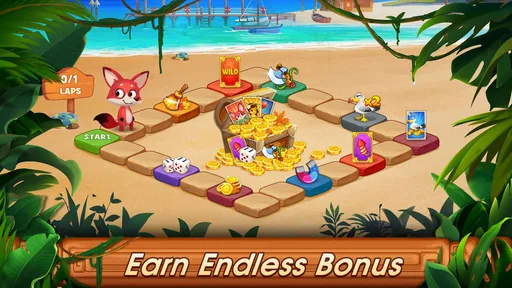
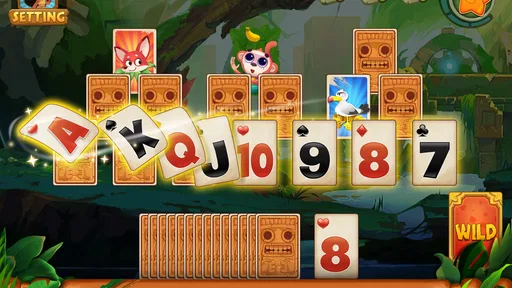
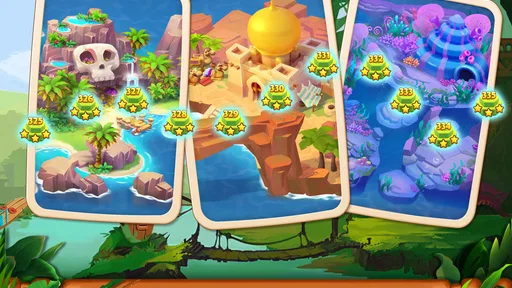
Our Review of Solitaire Tripeaks: Card Games
 Analysis by Appyee
I spent time with Solitaire Tripeaks: Card Games as a simple way to unwind, and its appeal became clear quickly: it puts the familiar patience-card format into short, approachable rounds that are easy to start and stop. This is a free card game from Card Games, Inc, aimed at Everyone, and it has the kind of relaxed presentation that suits a quiet break better than a serious competitive session.
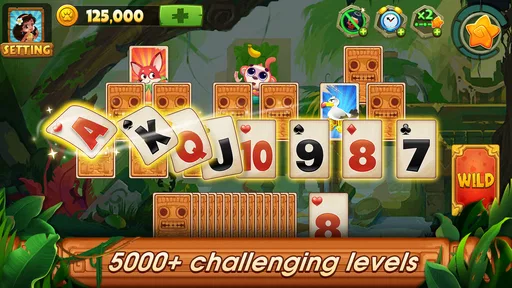
The basic idea is straightforward. You clear cards from the play area by choosing a card one value above or below the current card, building a run whenever the layout allows it. That rule is easy to understand, but the decisions are not always automatic. I found myself looking ahead, deciding whether to preserve a useful card for later or take a safe move immediately. That small layer of planning gives the game more staying power than a purely luck-driven card app.
Its store summary describes a relaxing collection of Solitaire games and highlights the Tripeaks journey, but the important practical point is how little commitment each session demands. I can play while waiting for an appointment, during a short commute, or at the end of the day when I want something interactive without learning a complicated system. It works best as a calm, repeatable five-minute diversion rather than a deep strategy game.
How the game feels during everyday play
I find the everyday appeal lies in how a round turns a spare moment into a small sequence of choices: play a card, see which paths open, and decide whether to keep going or pause. I’d use that rhythm during a waiting-room break, but I wouldn’t treat it as a substitute for a deeper strategy game. The next section looks at what makes those quick decisions satisfying—and where the loop can lose its pull.
Quick starts and reasonable speed expectations
From a user’s perspective, the strongest performance quality is immediacy. Solitaire is naturally divided into small actions, so the game does not need to sustain a demanding real-time scene or a crowded multiplayer match. Cards appear, I make a choice, and the round continues. That makes the experience feel light during ordinary use, especially compared with card games that add several layers of animation, menus, or live opponents.
I would still avoid promising identical speed on every phone. The game supports Android six point zero and later, which gives it a relatively broad compatibility range, but an older device can behave differently from a newer one. On a recent phone, this type of card layout should feel comfortable for casual play. On an aging handset with limited free space or many background apps, the overall phone may be the bigger factor than the card game itself.
The current version is 3.2.6. That is useful context when deciding whether to install it on an older Android device, because compatibility is not determined only by the game’s simple visual style. A device can meet the operating-system requirement and still feel less responsive if its storage is nearly full or its system is busy handling other tasks.
One practical habit helped me more than expected: I treated each round as a self-contained break instead of trying to rush through the layout. Fast tapping is not necessarily better in Tripeaks. A brief pause before removing a card can reveal a longer chain and reduce the chance of using the one card that would have opened the next section. That makes the game feel smoother because the player is making fewer corrective taps.
What happens during heavier use
The most demanding moments are not likely to come from the card rules themselves. They come when a player moves rapidly through several rounds, leaves the game open while switching between other apps, or keeps playing for a long session. In those situations, the important questions are whether the device remains responsive, whether the game returns cleanly after being backgrounded, and whether progress survives an interruption.
I found the short-round format helpful here. If I need to put the phone down, I am usually not abandoning a long campaign-style commitment. I can finish a small decision, pause, and return later. That is a meaningful advantage over more elaborate card games that expect longer sessions or punish stepping away at the wrong moment.
There is also a subtle resource trade-off in any free game that encourages repeated play. The installation itself is not the only consideration: extended screen time, repeated touches, and keeping the display active can matter more to battery life than the cards on screen. I would not choose it as a battery-saving activity, but it is a more modest workload than a visually intense action game. If battery preservation is important, lowering screen brightness and closing unrelated background apps will usually make a larger difference than changing how quickly the cards are played.
For a heavy-use routine, I recommend checking the phone before starting a long session. Close an app that is already misbehaving, leave some storage available, and avoid repeatedly forcing the game to reopen. Those are ordinary Android maintenance steps, but they are especially useful with casual games because their simplicity can make users blame the game for slowdowns caused elsewhere on the device.
Reliability and recovering from interruptions
Reliability matters more in a casual game than many people expect. A player may open it for a quick break, receive a call, lock the screen, or switch to a message before returning. The game is most valuable when it fits around those interruptions instead of demanding perfect attention.
My view is that the format gives it a sensible recovery advantage, even though no mobile game should be treated as immune to interruptions. A Tripeaks round is easy to understand when you return to it, and the board is visually simpler than a busy strategy interface. If the app has been removed from memory by Android, the safest assumption is that it may need to reload rather than expecting every temporary screen state to remain exactly as it was.
That is why I would not begin a round immediately before switching off the phone or entering an area with unreliable connectivity. Finish the current choice first, let the game settle, and then leave it. This is a small workflow change, but it reduces frustration when a phone decides to reclaim memory or restart an application.
The game’s broad adoption suggests that many people find the basic experience dependable enough to keep using: it has passed one million installs, with an average rating of 4.8 from around one hundred twenty-five thousand ratings. Those figures do not guarantee a perfect experience on every device, but they do make it easier for me to recommend trying it when the main goal is uncomplicated Solitaire rather than a specialized feature set.
Device limits and who should think twice
Android six point zero is the minimum operating system, so anyone using an older phone should check the software version before planning around the game. Meeting that requirement is only the first step. A phone with very little free storage, an aging battery, or aggressive background-app management may produce a less comfortable experience even when installation succeeds.
I would also think about screen size. Solitaire benefits from cards that are easy to distinguish and tap accurately. On a small display, the game can still be usable, but crowded layouts may require more care, especially for someone with reduced vision or larger display settings. On a tablet or a larger phone, the card arrangement should be easier to inspect, although the game’s value remains the same: quick, quiet rounds rather than a dramatically expanded strategy experience.
Data and battery expectations deserve a realistic explanation. A card game with simple board interactions is unlikely to place the same graphics demand on a device as a three-dimensional game, but I would not call it completely free of resource use. The screen stays active, animations may accompany actions, and repeated sessions naturally consume power. If your phone already struggles with heat or battery drain, this is not a solution to those underlying problems.
Storage is another reason to keep expectations reasonable. I would leave comfortable free space before installing any game, particularly on an older device where updates and temporary files can become awkward. The game is free to download, but free does not mean entirely without commercial pressure: in-app purchases range from $0.99 to $99.99 per item. That wide range is worth noticing before handing the phone to a child or allowing purchases without supervision.
Learning the layout instead of tapping by instinct
The most useful skill is recognizing that every available move changes what comes next. If the current card allows both a higher and a lower choice, I try to choose the option that exposes more cards or preserves flexibility. A move that clears one card immediately may be weaker than a move that opens a hidden sequence.
When several cards are available, I scan the exposed layout before touching anything. I look for cards that can be removed only through one narrow route, then avoid consuming the card needed to reach that route. This is not advanced card-game theory, but it turns the experience from random tapping into a small planning exercise.
I also recommend slowing down near the end of a board. Early moves often offer several possibilities, while the final exposed cards can depend on one decision made much earlier. Rushing because the layout looks nearly complete is a common way to waste a promising run. The game is more satisfying when I treat the last few cards as a puzzle rather than a victory animation waiting to happen.
Free access, purchases, and family suitability
The free price makes it easy to test without committing money at the start. That suits this category because Solitaire preferences are personal: some players want a minimalist deck, while others enjoy a journey structure and a more guided sense of progress. I would install this one first if I wanted a relaxed Tripeaks-focused experience and did not mind optional spending prompts.
The Everyone content rating makes it broadly suitable for general audiences, but I would still enable purchase controls on a shared family device. The presence of items priced from $0.99 through $99.99 means a child can encounter a very different spending risk from the harmless-looking card rules. This is not a reason to reject the game; it is simply a reason to treat the purchase settings as part of the setup.
For adults, the main question is whether the optional purchases improve the experience enough to justify them. I would begin with the free version and play several sessions before deciding. If the core card loop already gives you the relaxation you wanted, there is no practical need to spend immediately. If you dislike games that repeatedly present purchase opportunities, a paid, ad-free Solitaire alternative may be a better fit even if its initial price is less convenient.
How it compares with familiar Solitaire alternatives
Compared with classic Klondike Solitaire, Tripeaks feels more focused on clearing a visible arrangement through short chains. Klondike is often better for players who enjoy a more traditional tableau and a slower, more methodical style. I would choose Klondike when I want the recognizable rules of a standard deck; I choose this game when I want a lighter puzzle with a clear next move.
Compared with Spider Solitaire, the difference is even more noticeable. Spider rewards building and reorganizing long sequences, so it can feel more demanding and deliberate. Tripeaks is easier to pick up and generally better for a quick break, while Spider is the stronger choice for someone who wants a longer mental challenge from each deal.
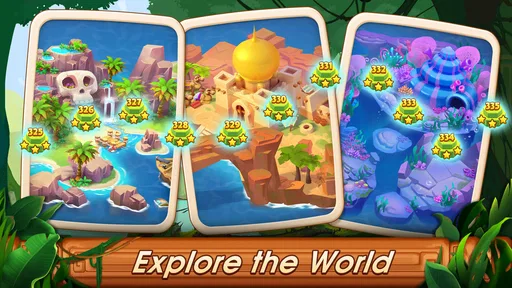
Compared with a completely plain offline card app, this game’s journey-oriented presentation is likely to feel more structured, but that structure can also be less appealing to purists. If you want nothing beyond a deck, a score, and no extra prompts, a minimalist alternative may be cleaner. If you like having a reason to continue from one round to the next, this version has more personality than a bare card table.
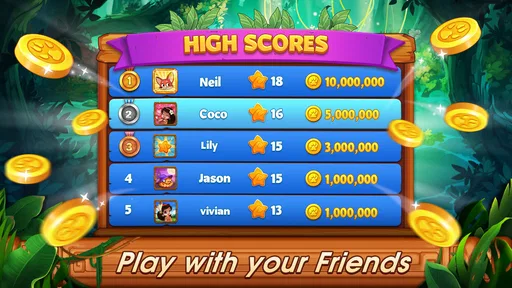
It is also not the right choice for competitive players seeking live opponents, rankings, or a highly tactical multiplayer environment. My enjoyment came from the small decisions and the relaxing pace, not from proving anything against another person. Someone who needs constant competition will probably outgrow it quickly.
Who will enjoy it most
I would recommend it to people who already like Solitaire but want a more approachable Tripeaks format, to commuters looking for short sessions, and to anyone who enjoys low-pressure pattern recognition. It is also a good candidate for a shared family tablet when the adults manage purchases and the device meets the operating-system requirement.
I would be more cautious about recommending it to players who dislike monetized free games, need guaranteed uninterrupted progress across frequent app switching, or want a completely traditional Solitaire ruleset. It is also not ideal for someone searching for a demanding strategy title. The game asks for attention, but it does not ask for the kind of sustained planning found in deeper card puzzles.
One everyday scenario captures its strengths well. Imagine waiting for a delayed appointment with only a few minutes available. A long role-playing game would be inconvenient, and a competitive match could be stressful if you have to leave suddenly. Here, I can open a round, make a handful of choices, and stop without feeling that I have wasted a larger commitment. That flexibility is the real reason I kept returning to it.
My performance verdict
After weighing speed, device demands, interruption handling, and the free-to-start model, I see Solitaire Tripeaks: Card Games as a dependable casual option rather than a technically ambitious game. Its card-focused design should be comfortable for ordinary Android use, while the minimum requirement of Android six point zero keeps it accessible to many older phones. Still, device age, available storage, background memory, and battery condition can shape the experience more than the simple board suggests.
The strongest recommendation is for relaxed solo play in short sessions. I like that the rules are immediately readable but still reward looking ahead, and I appreciate that a round can fit into an ordinary gap in the day. The 4.8 average and large player base support the impression that the format connects with many users, while the free entry point makes testing it straightforward.
My reservations are equally clear. Optional purchases deserve attention, especially on a family device, and players who prefer pure Klondike, deeper Spider-style planning, or competitive multiplayer should look elsewhere. I would also avoid judging performance from the first launch alone on an older phone; give the device enough free storage, close demanding background apps, and see how it behaves during the kind of session you actually plan to play.
My final recommendation is simple: try it if you want a gentle Tripeaks card game that starts quickly and fits around real life. Begin without spending, play slowly enough to plan your chains, and decide afterward whether its journey-style approach matches your taste. For a calm, accessible card break, it earns a place on my phone; for a pure, purchase-free or highly competitive Solitaire experience, another option would serve me better.
Verdict
Strengths of Solitaire Tripeaks: Card Games
- Easy-to-learn rules make it suitable for casual players.
- Short rounds work well for quick breaks or daily play.
- Hundreds of levels provide plenty of single-player content.
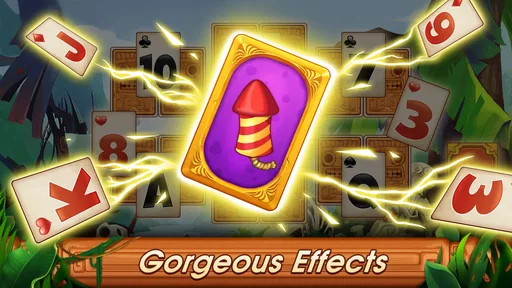
- Power-ups can help clear difficult card layouts.
- Bright visuals and simple controls are mobile-friendly.
Limitations of Solitaire Tripeaks: Card Games
- Some advanced levels may feel heavily dependent on luck.
- Power-ups and extra moves can encourage in-app purchases.
- Ads may interrupt play, especially between rounds.
- Progress can become repetitive after extended sessions.
- Offline access may be limited for certain features.
Other Releases by Card Games, Inc
View All


Similar Picks in This Category
View All
Solitaire - Classic Card Games
MobilityWare4.6

UNO!™
Mattel163 Limited4.3

Spider Solitaire: Card Games
MobilityWare4.6

Solitaire.com - Classic Cards
Tripledot Studios Limited4.7

Plants vs. Zombies™ Heroes
ELECTRONIC ARTS4.1

Hearthstone
Blizzard Entertainment, Inc.4.1
Frequently Asked Questions
What is Solitaire TriPeaks: Card Games?
Solitaire TriPeaks: Card Games is a casual solitaire game based on the classic TriPeaks layout. You clear cards from three overlapping peaks by playing a card that is one rank higher or lower than the card in the discard pile. The game usually combines traditional card-solving with levels, daily challenges, boosters, coins, and themed events, making it suitable for short sessions or longer relaxing play.
How do you play Solitaire TriPeaks: Card Games?
At the beginning of each round, some cards are face up while others remain hidden. You remove an available card when its rank is immediately above or below the current discard card, regardless of suit. If no suitable move is available, you draw from the stock. The goal is to clear the board, build longer streaks, reveal hidden cards, and use wild cards or other power-ups carefully when the layout becomes difficult.
Is Solitaire TriPeaks: Card Games free to download and play?
The game is generally available as a free download, allowing you to play the main levels without paying upfront. However, free-to-play features may include advertisements, optional in-app purchases, coin packs, extra lives, boosters, or special event items. You can normally progress without spending money, but purchases may reduce waiting time or provide additional help when a level is particularly challenging.
Can Solitaire TriPeaks: Card Games be played offline?
Many basic solitaire rounds can often be played without a continuous internet connection, which makes the game convenient for travel or areas with limited service. Nevertheless, an internet connection may be required for advertisements, cloud synchronization, daily rewards, tournaments, updates, and limited-time events. Offline availability can also vary by version and device, so it is worth checking the game’s current store description.
Is Solitaire TriPeaks: Card Games suitable for children and beginners?
The game is easy for beginners to understand because it uses simple tap controls and familiar card ranks rather than complicated rules. It can also be enjoyable for children, although parents should review the advertising, privacy, and in-app purchase settings before allowing independent play. Some levels may depend on luck, and social events or reward systems can encourage longer sessions, so parental controls may be useful.
Play our best games!


